How FlowSonic Works: Non Contact Ultrasonic Microplastics Separation in Flowing Water

This post gives a overview of how the FlowSonic prototype works. We explain how ultrasound is coupled into a flow tube to concentrate microplastics in a controlled region of the stream, then split the outlet into a clean stream and a concentrate for collection. We also outline the key system elements and the design choices that support practical, safe prototyping without relying on fine meshes or pressure heavy membranes.
Yihang Zhang

2/15/20262 min read

The problem: microplastics sit in the gap

If you run a textile plant or an industrial laundry with water reuse, fine particles can build up, clog filtration, and increase maintenance. When reverse osmosis is involved, membrane fouling and chemical cleaning can quickly become a major operational burden.

FlowSonic targets microplastics at the source. Instead of relying on finer meshes or pressure heavy membrane stages, it uses a non contact ultrasonic field inside a flow tube to concentrate microplastics into a controlled region of the stream. The outlet is then split into a clean stream and a concentrate stream for collection. The sections below explain the working principle at a high level and outline the key elements of the prototype.

The approach: intercept upstream without relying on fine pores

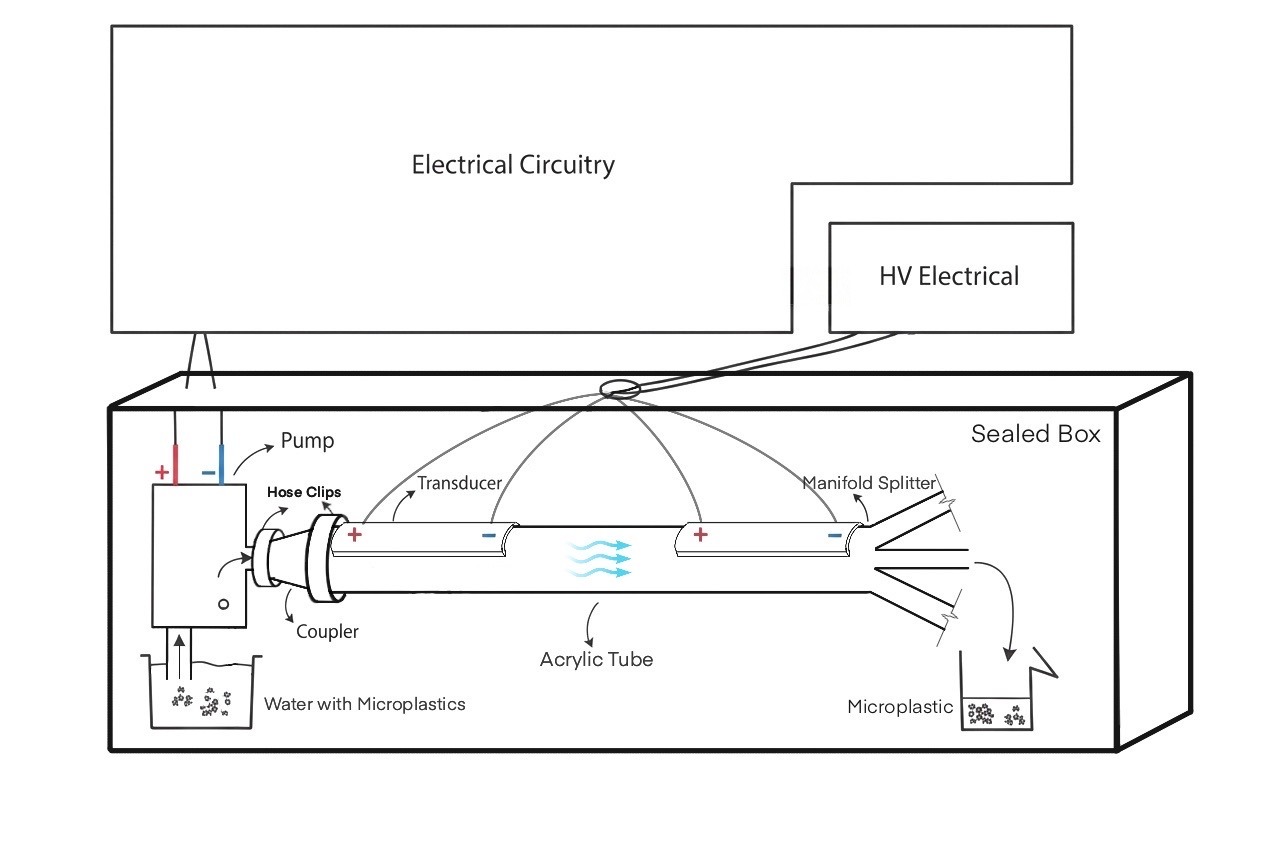
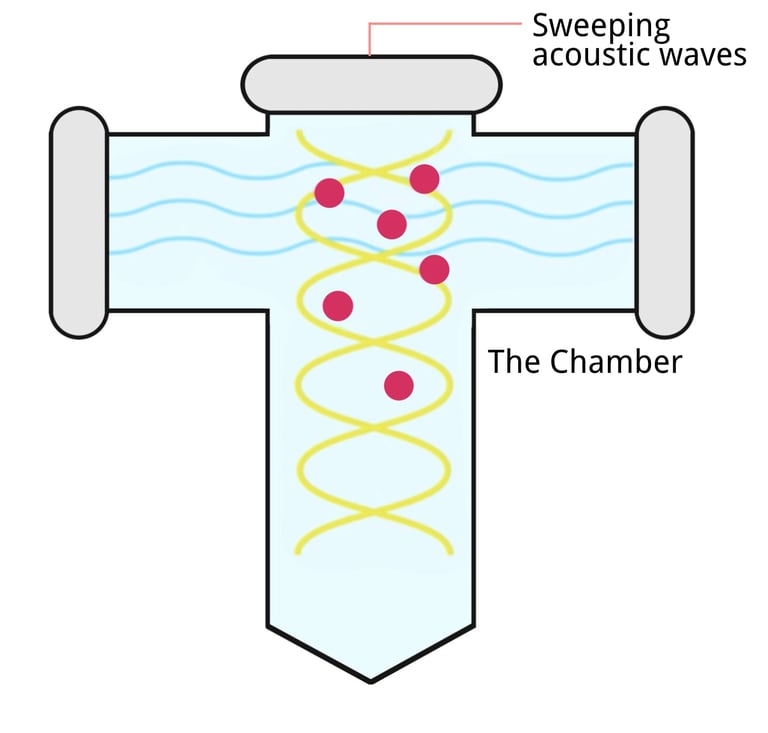
FlowSonic runs as a closed loop flow system. Contaminated water is pumped through an acrylic flow tube inside a sealed enclosure. Ultrasonic transducers couple energy into the tube wall, forming an acoustic field in the moving water.

FlowSonic is designed to intercept microplastics early, closer to where they are generated. Instead of using ultra fine meshes or pressure heavy membrane polishing, the goal is to concentrate particles in flow and separate them without turning the system into a clogging bottleneck.

How FlowSonic works

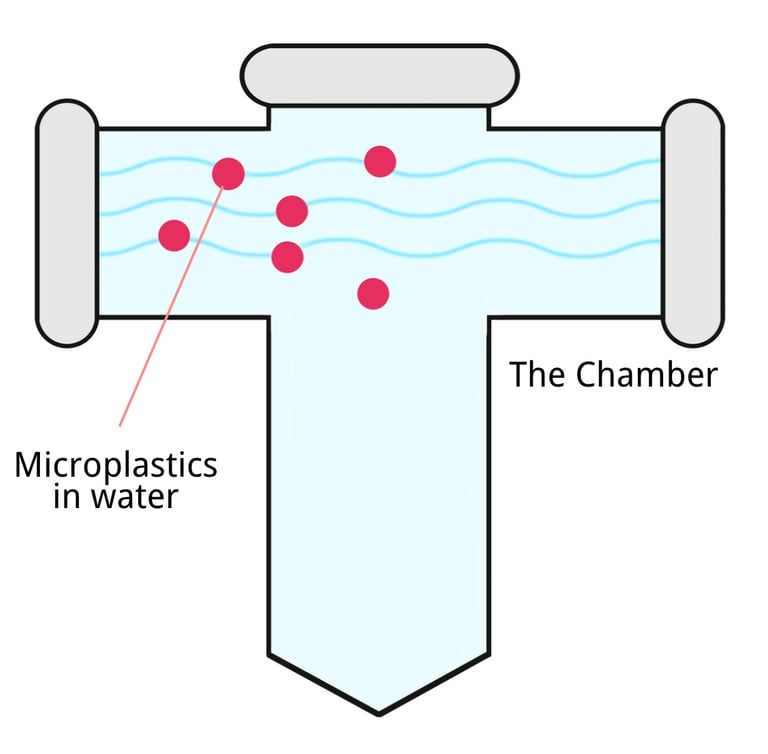
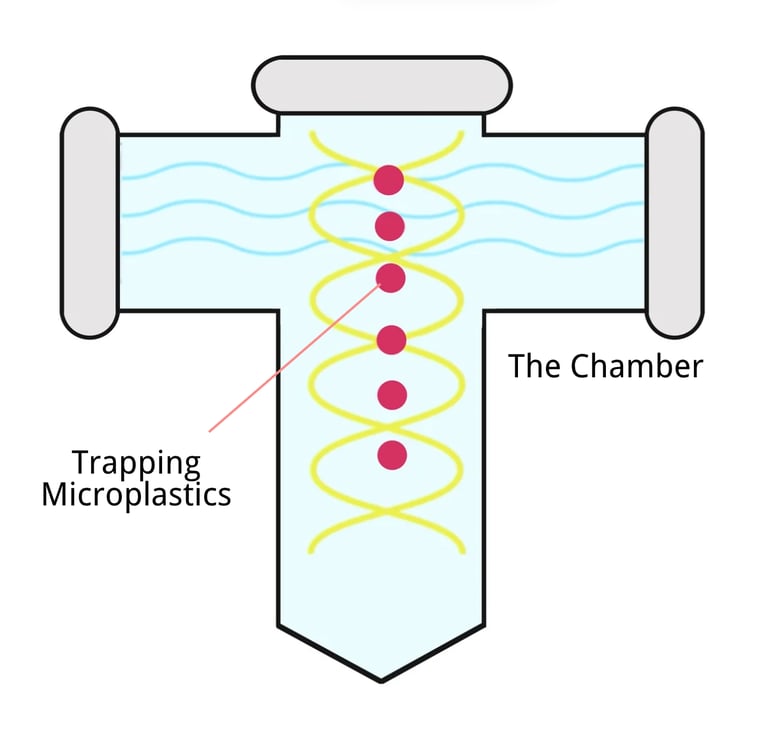
In the active zone, ultrasonic standing waves create acoustic forces that guide suspended microplastics toward predictable regions of the field. This produces a controlled focusing effect, concentrating particles into a tighter stream within the flow.

At the outlet, a manifold splitter separates the flow into a clean water stream and a microplastic rich concentrate stream for collection or further handling. For safer iteration, the prototype is designed to keep wet components contained in the sealed enclosure while isolating the high voltage electronics in a separate section, supporting safer prototyping and cleaner operation during testing.

Key elements in the system

  • Feed reservoir with microplastics

  • Pump with basic flow control

  • Acrylic flow tube and separation zone

  • Ultrasonic transducers and acoustic coupler

  • Sealed enclosure for wet components

  • HV driver and control electronics section

  • Outlet manifold splitter

  • Concentrate collection container